Policy Center

Moving beyond crisis

Building a coordinated, community-based system of care for people with serious mental health needs in Chicago.

The Beyond Crisis Coalition

The Beyond Crisis Coalition brings together people with lived experience, providers, policymakers, funders, advocates, and cross-sector partners across Chicago to build a coordinated, community-based prevention and post-crisis ecosystem for people living with serious behavioral health conditions.

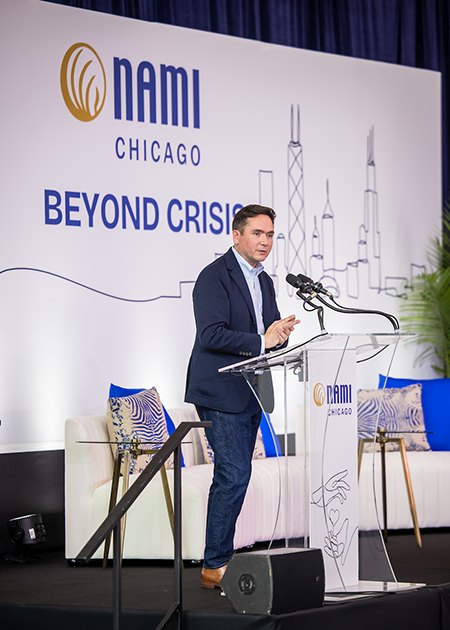
This work will begin with the Beyond Crisis Summit in the summer 2026 and continue through ongoing coalition efforts. This is not a one-time event. It is the start of a longer-term effort to align partners around shared goals, clear roles, and concrete actions.

If you are interested in participating in the Beyond Crisis Coalition, contact our policy team to learn more.

Shared Definitions

Serious Mental Illness (SMI)
A diagnosable mental, behavioral, or emotional disorder that substantially affects major life activities like work, independent living, and relationships. SMI conditions include bipolar disorder, major depressive disorder, and schizophrenia. 

Crisis Response
Behavioral health crisis response refers to the continuum of services available to individuals experiencing a behavioral health crisis. A crisis response should involve assessment, de-escalation, stabilization, and connection to further resources. 

Lived Experience
First-hand personal knowledge of
 navigating a condition, whether as an individual with a condition or a loved one.
 

Crisis
A mental health crisis is any situation in which a person’s behavior puts them at risk of hurting themselves or others or prevents them from meeting their basic survival needs (e.g. eating, drinking water, managing their health or well-being, etc.) in such a way that their safety is at risk. (NAMI National) 

Peer
An individual with lived experience navigating a mental health condition or substance use disorder. Peers are able to offer a deeper level of empathy and understanding that doesn’t come from traditional care. 

Why this work is needed

Crisis work is rightly focused on responding to people in crisis and connecting them with care. As Chicago continues investing in crisis response, we must recognize that truly moving beyond crisis requires coordinated systems of care that are able to support recovery.

Today, our system in Chicago remains fragmented. People in crisis are most often responded to by law enforcement, and alternatives to emergency rooms remain limited. This leaves those experiencing the most serious challenges cycling through unstable housing, emergency rooms, hospitals, jails, and homelessness across the city.

There is strong public and political will to invest in new approaches. But despite significant investment since COVID, the system remains unable to effectively serve those with the greatest need. The result is repeated crises, preventable institutionalization, inequitable outcomes, and strain across health care, justice, housing, and community systems in Chicago.


A different approach

Improving crisis response is necessary, but it is not sufficient. We cannot continue to engage people with serious mental health conditions only at the point of crisis.

A stronger system must include prevention, recovery, and long-term community-based support. This work requires new ways of working across systems, new models of care, and a shared commitment to supporting people in more dignified, effective ways.

The goal is not just to respond more effectively, but to expand the range of options available before, during, and after crisis.

Our vision

We are building toward a city where:
Community-based care is available for all people with serious behavioral health conditions.
Lived experience drives policy, program design, and accountability.
Cross-sector partners share openly with each other, remove fragmentation, and establish a unified understanding of best practices and responsibilities.

Why join the coalition

Coalition partners gain alignment around a shared framework for addressing serious mental illness and reducing fragmentation across systems in Chicago.
Identify and prioritize gaps in prevention and recovery
Shape actionable roadmaps and solutions
Influence policy and funding priorities
Advance coordinated, community-based models of care
Build shared accountability for long-term change
YOU MIGHT BE INTERESTED IN

Crisis system

Learn how Chicago’s mental health crisis system works today, including 988, mobile response, and gaps in care.

Treatment settings

From outpatient care to inpatient and residential programs, learn what treatment options are available and how people move through different levels of care.

Recovery & wellness

Recovery doesn’t end after a crisis. Learn how community-based support, housing, and connection help people build stability over time.